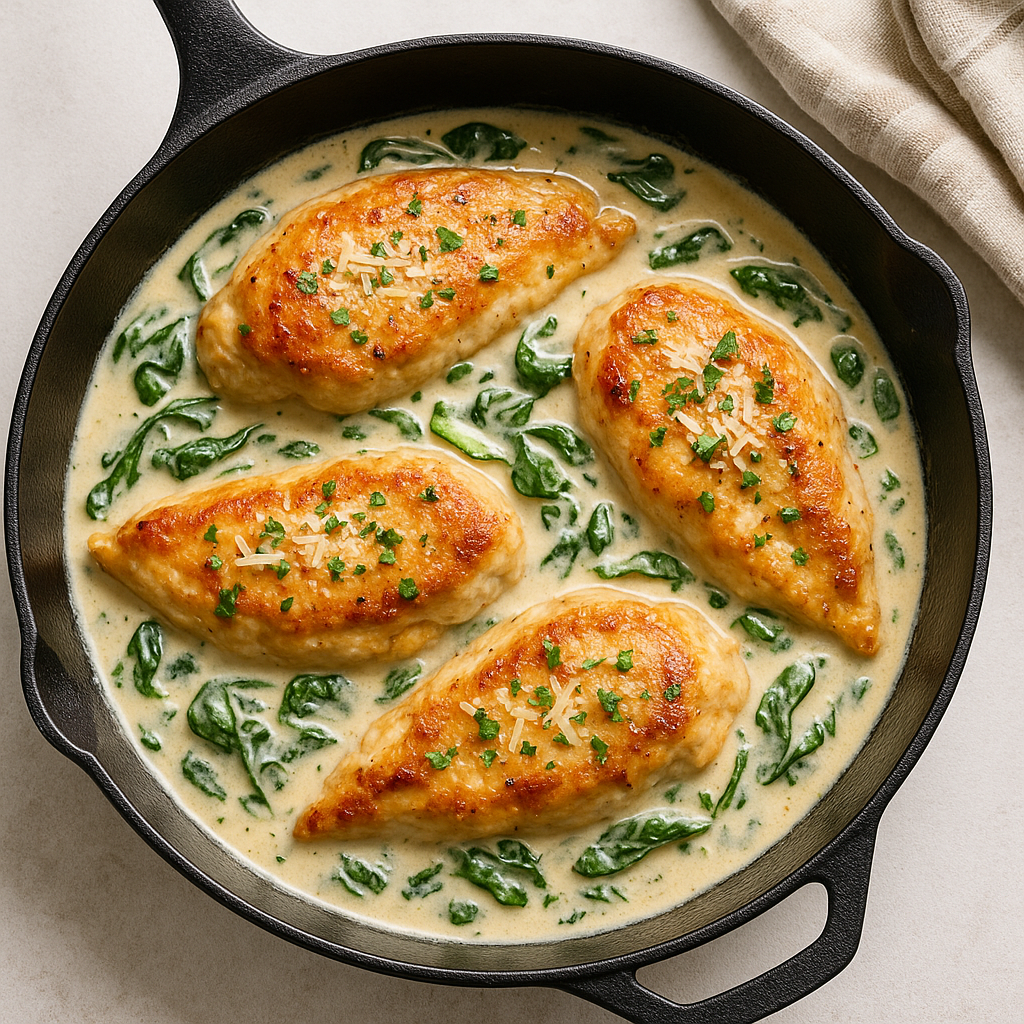
There are certain dishes that feel comforting yet sophisticated at the same time, and Chicken Florentine is one of them. With tender golden-seared chicken simmered in a velvety cream sauce and fresh spinach folded in for color and nutrition, it strikes the perfect balance of hearty and elegant. Inspired by Florence, Italy, this dish has become a staple on dinner tables across the world not just for its rich flavors but also for how easily it comes together in one pan. Whether you’re planning a cozy weeknight meal, hosting guests, or simply craving something creamy and satisfying, Chicken Florentine delivers every single time. In this article, you’ll learn the simple step-by-step method, tips for getting the best results, and creative variations that make this recipe endlessly versatile.
1. What is Chicken Florentine?
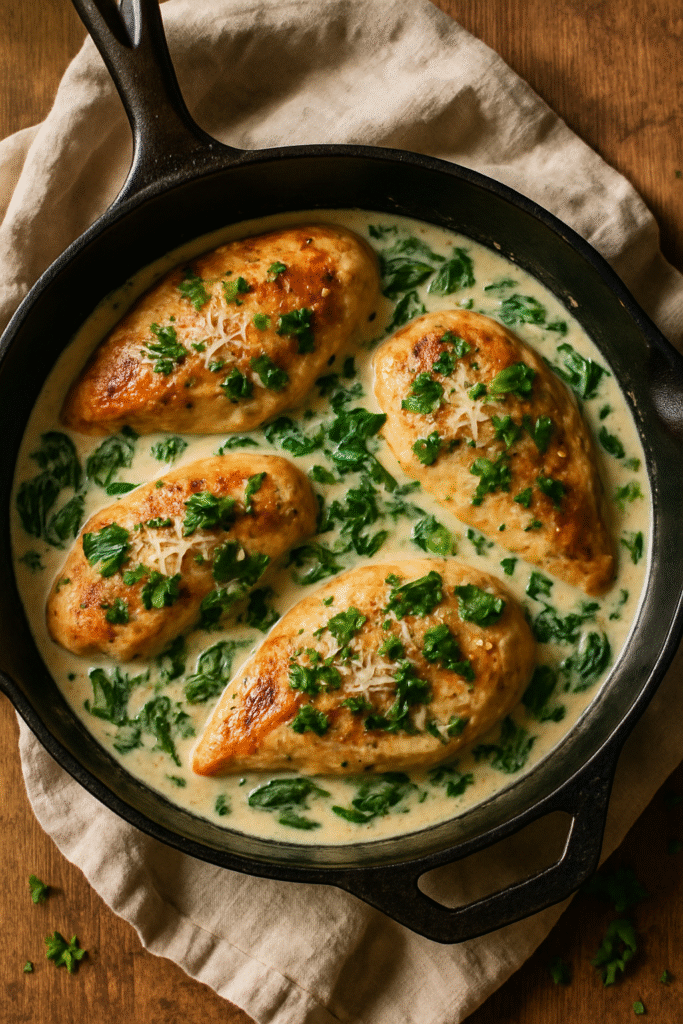
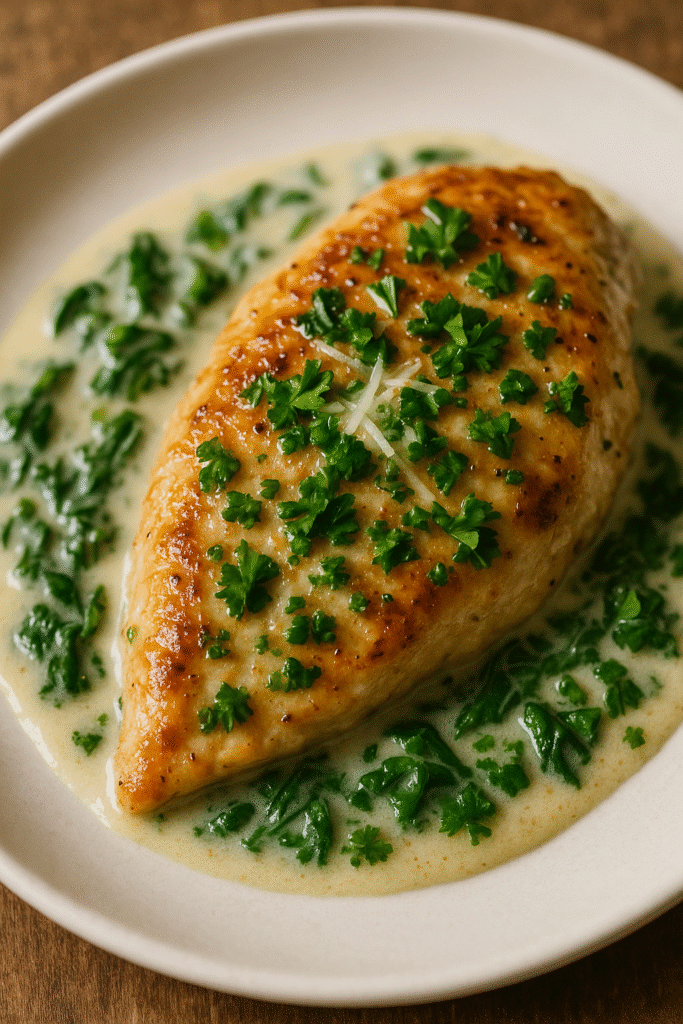
Chicken Florentine is a classic dish rooted in Italian culinary tradition, where the word Florentine refers to dishes prepared with spinach, inspired by the cuisine of Florence. Over the years, chefs across Europe and the U.S. embraced this style, creating a rich and creamy chicken recipe that combines hearty protein with fresh greens. At its core, Chicken Florentine is about balance: the crisp sear of tender chicken, the freshness of spinach, and the indulgence of a velvety cream sauce. This harmony of flavors makes it equally suited for everyday dinners and elegant occasions. Its versatility has also led to many variations, from pasta-based versions to lighter low-carb twists, proving that it’s a timeless recipe that never loses appeal.
2. Ingredients You’ll Need for Chicken Florentine
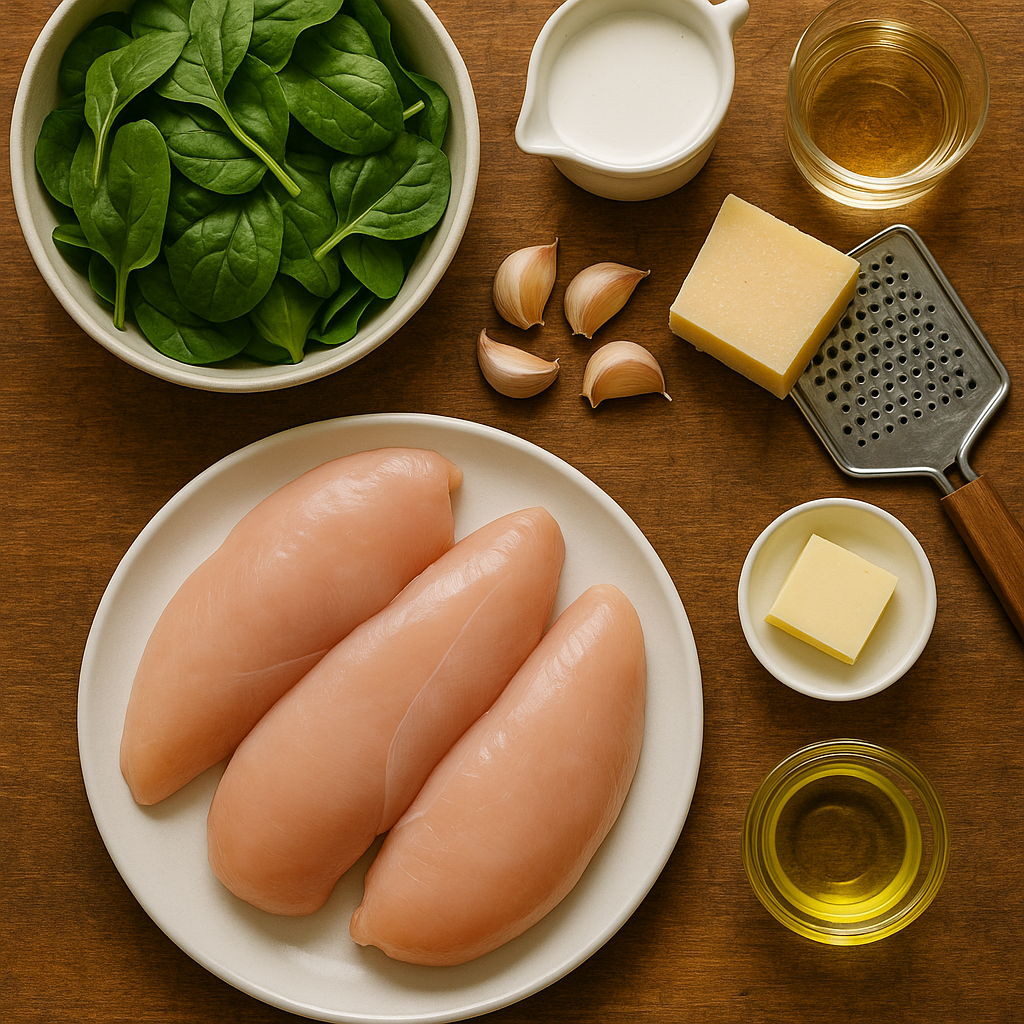
To prepare a truly delicious Chicken Florentine, you don’t need anything complicated just fresh, simple ingredients that come together beautifully. Here’s what you’ll want to have on hand:
- Chicken breasts – boneless, skinless, and evenly sized for quick, even cooking.
- Fresh spinach – the star of Florentine cooking; use baby spinach for tenderness.
- Garlic cloves – freshly minced for aromatic depth.
- Heavy cream – creates the rich, velvety sauce.
- Parmesan cheese – freshly grated for a sharp, nutty flavor.
- Butter & olive oil – for sautéing and adding richness.
- White wine or chicken broth (optional) – to deglaze the pan and intensify flavor.
- Seasonings – salt, black pepper, and a pinch of nutmeg to bring everything together.
3. Step-by-Step Instructions
Making Chicken Florentine at home is simpler than it looks, and everything comes together in just one pan. Follow these steps for a creamy, flavorful result every time:
- Prep the chicken – Pat the chicken breasts dry, season generously with salt and pepper on both sides.
- Sear to golden perfection – Heat olive oil and a little butter in a large skillet over medium-high heat. Sear the chicken breasts for about 4–5 minutes per side until golden brown. Remove and set aside.
- Build the sauce base – In the same pan, melt butter, then sauté minced garlic until fragrant. Deglaze with white wine (or chicken broth) to lift up all the browned bits for extra flavor.
- Make it creamy – Pour in heavy cream, stir, and bring to a gentle simmer. Sprinkle in freshly grated parmesan and a pinch of nutmeg for depth. Stir until smooth.
- Add the spinach – Toss in fresh baby spinach and let it wilt gently into the sauce.
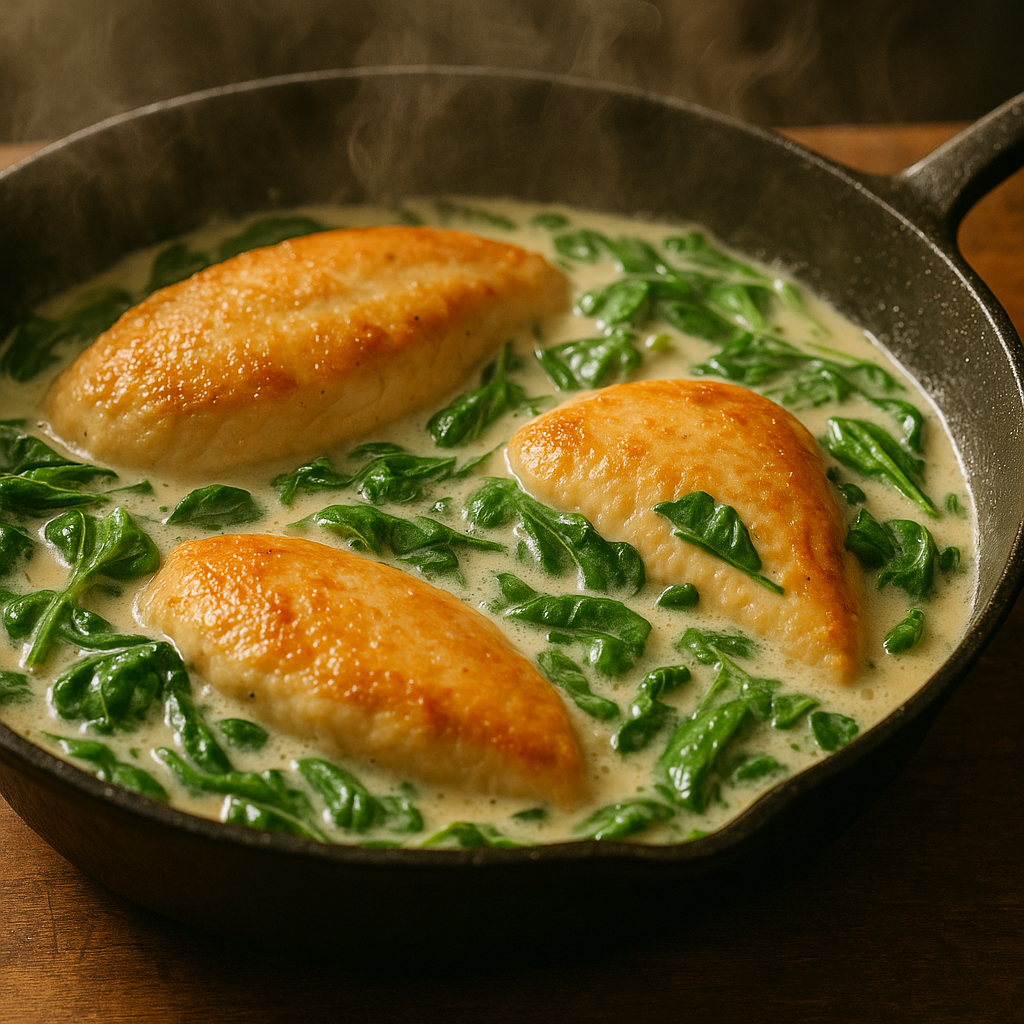
- Finish with chicken – Return the seared chicken breasts to the skillet, spoon the creamy sauce over them, and let everything simmer together for a few minutes until the chicken is fully cooked and infused with flavor.
4. Tips for the Perfect Chicken Florentine
A few small details can make your Chicken Florentine taste like it came straight from a restaurant kitchen:
- Pound chicken evenly – If the breasts are too thick, lightly pound them for even cooking and juicier results.
- Don’t skimp on searing – That golden crust not only looks appetizing but also deepens the overall flavor of the dish.
- Use fresh spinach – Frozen spinach can release excess water, diluting the sauce. Fresh baby spinach keeps the dish vibrant and creamy.
- Deglaze for extra flavor – White wine adds a delicate acidity, but chicken broth works wonderfully if you prefer alcohol-free.
- Season in layers – Lightly season at each stage (chicken, sauce, spinach) instead of only at the end. This keeps every bite flavorful.
- Avoid boiling the cream – Keep the sauce at a gentle simmer to prevent it from breaking or curdling.
5. Variations to Try
One of the best things about Chicken Florentine is how easily it adapts to different tastes and occasions. Here are a few delicious twists to try:
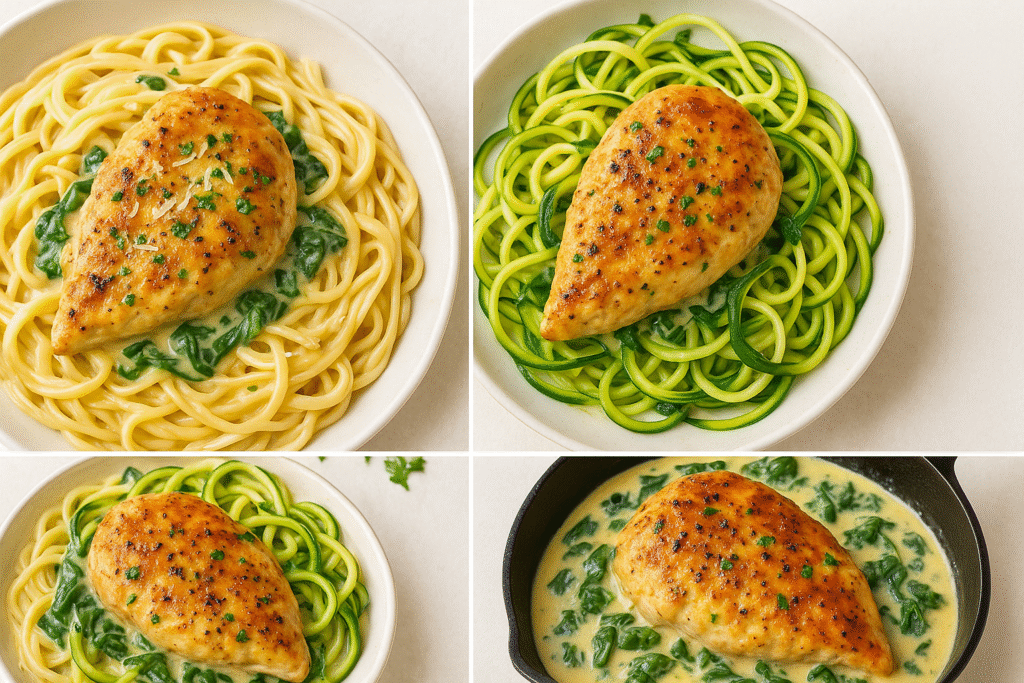
- Chicken Florentine Pasta – Toss the creamy spinach sauce with fettuccine, penne, or spaghetti, then top with sliced chicken for a hearty pasta dinner.
- Keto/Low-Carb Florentine – Skip the pasta and serve the chicken with zucchini noodles, cauliflower rice, or roasted vegetables.
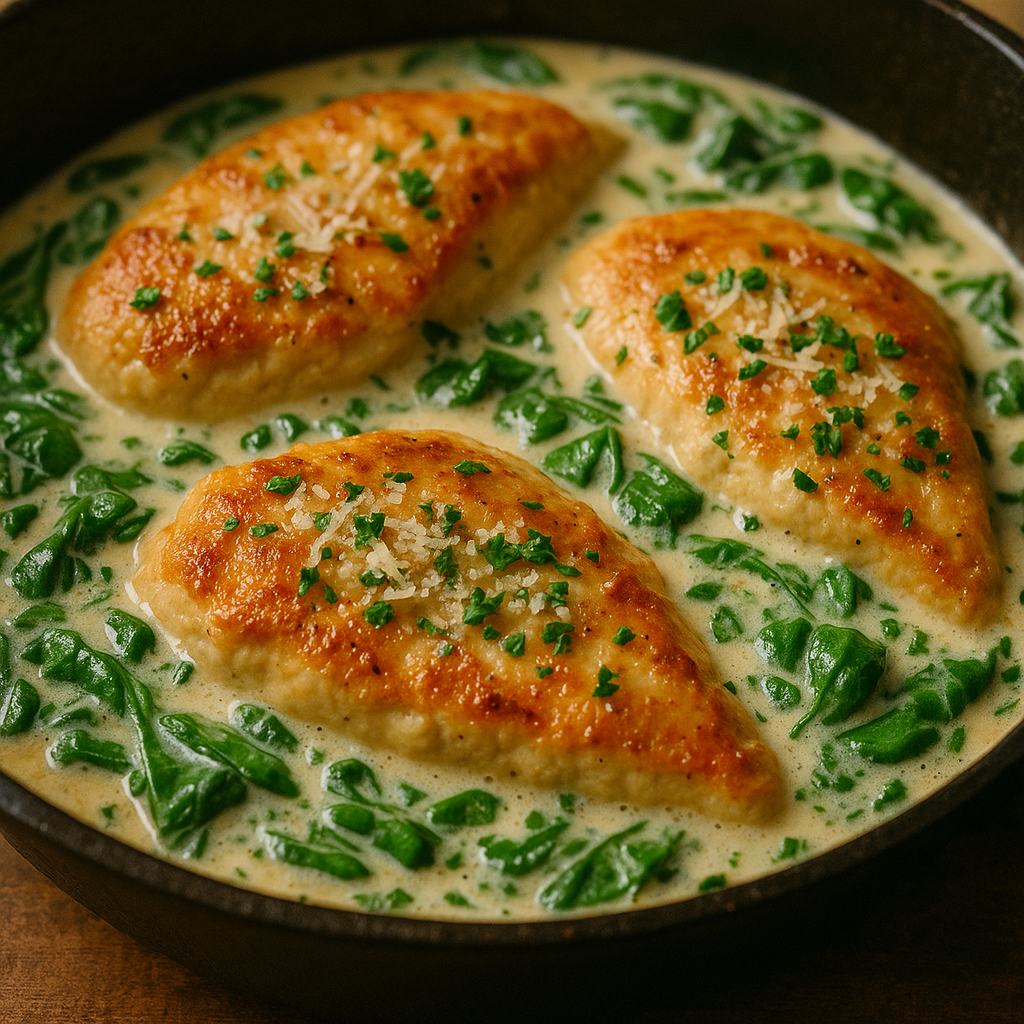
- One-Pan Skillet Florentine – Cook everything in a single large skillet, then serve directly at the table for a rustic, family-style meal.
- Florentine with Chicken Thighs – For extra juiciness and flavor, swap chicken breasts with bone-in or boneless thighs.
- Dairy-Free Florentine – Use coconut cream or cashew cream instead of heavy cream, and nutritional yeast in place of parmesan.
6. Serving Suggestions
Chicken Florentine is versatile enough to pair with many side dishes, making it easy to adapt for weeknights or special dinners. Here are some perfect pairings:
- With pasta – Fettuccine or penne captures the creamy sauce beautifully.
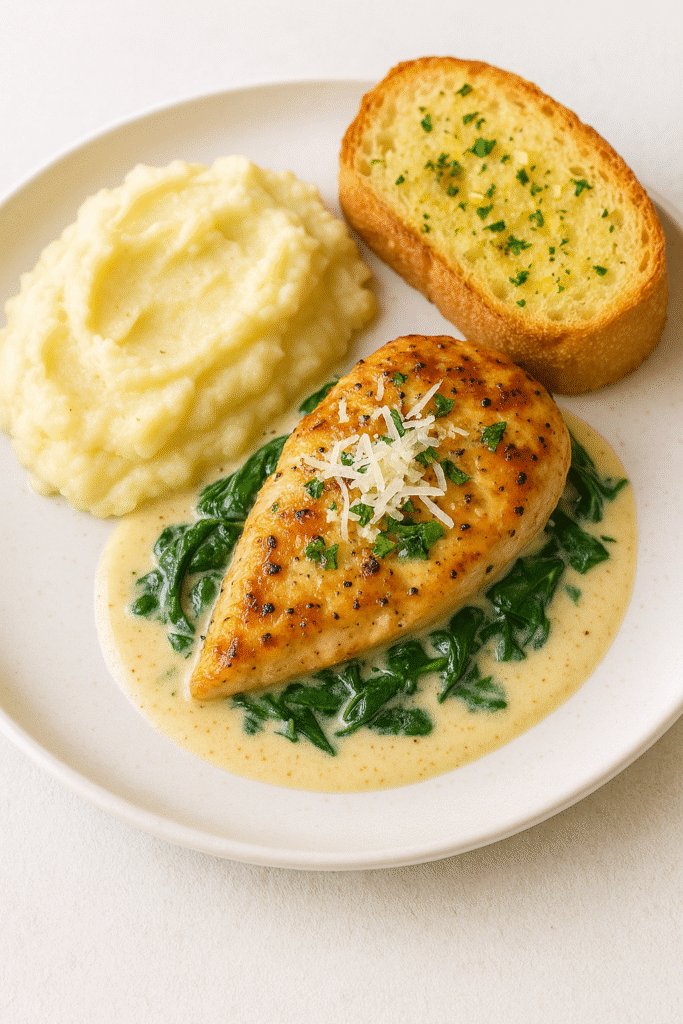
- With bread – A warm, crusty baguette or garlic bread is perfect for soaking up every drop of sauce.
- With potatoes – Creamy mashed potatoes or crispy roasted baby potatoes complement the richness.
- With rice or grains – Fluffy jasmine rice, wild rice, or even quinoa balances the meal.
- With vegetables – Steamed asparagus, roasted carrots, or green beans add freshness and color to the plate.
- Wine pairing – A crisp Chardonnay or Sauvignon Blanc enhances the creamy, garlicky flavors of the dish.
7. Storing & Reheating
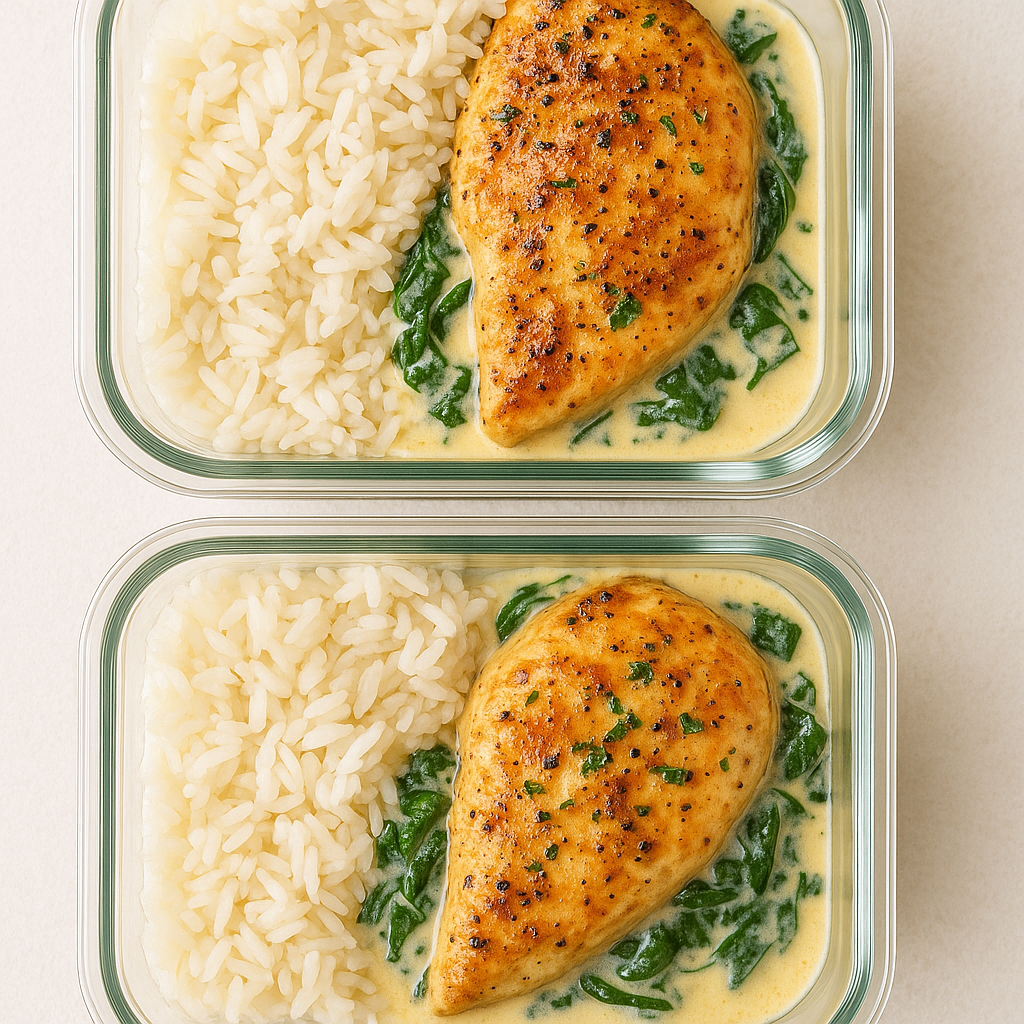
One of the best things about Chicken Florentine is that it reheats well, making it great for meal prep or next-day lunches. To keep the flavors intact, follow these tips:
- Refrigeration – Store leftovers in an airtight container for up to 3 days.
- Freezing – You can freeze it, but note that cream sauces sometimes separate after thawing. If you do freeze, keep it in a freezer-safe container for up to 2 months.
- Reheating on stove – Warm gently over low heat in a skillet, adding a splash of milk or broth to loosen the sauce if it has thickened.
- Microwave option – Heat in short intervals, stirring occasionally, to avoid curdling the cream.
- Avoid boiling – Always reheat at a gentle temperature to maintain the silky smooth texture of the sauce.